Tested
What Google Antigravity built from the Mirage prompt
On 18 November 2026 we pasted the Mirage build prompt into Google Antigravity, in one session, using Gemini 3.8 Flash at medium effort, and let it build. These are screenshots of the result, beside the Vibesignet demo the prompt describes. Neither is retouched. It is one run on one template.
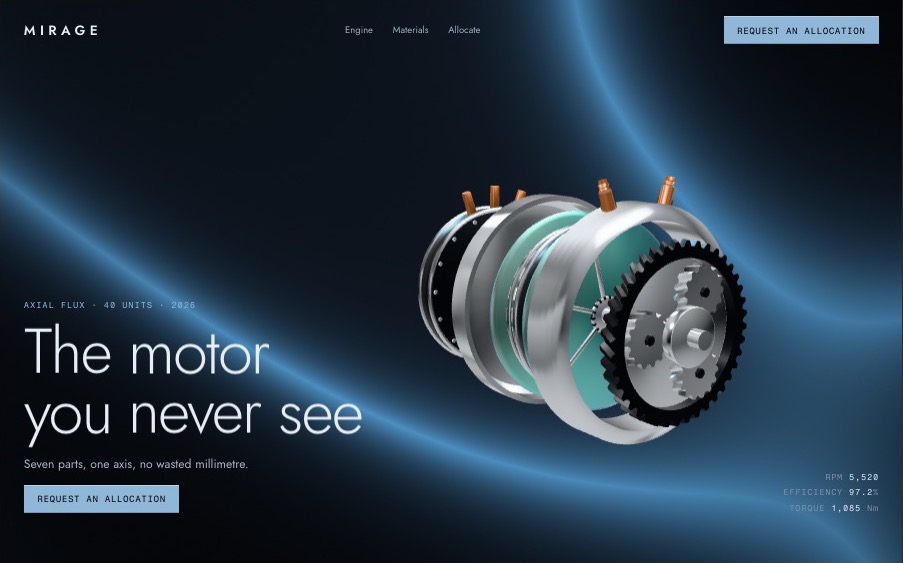
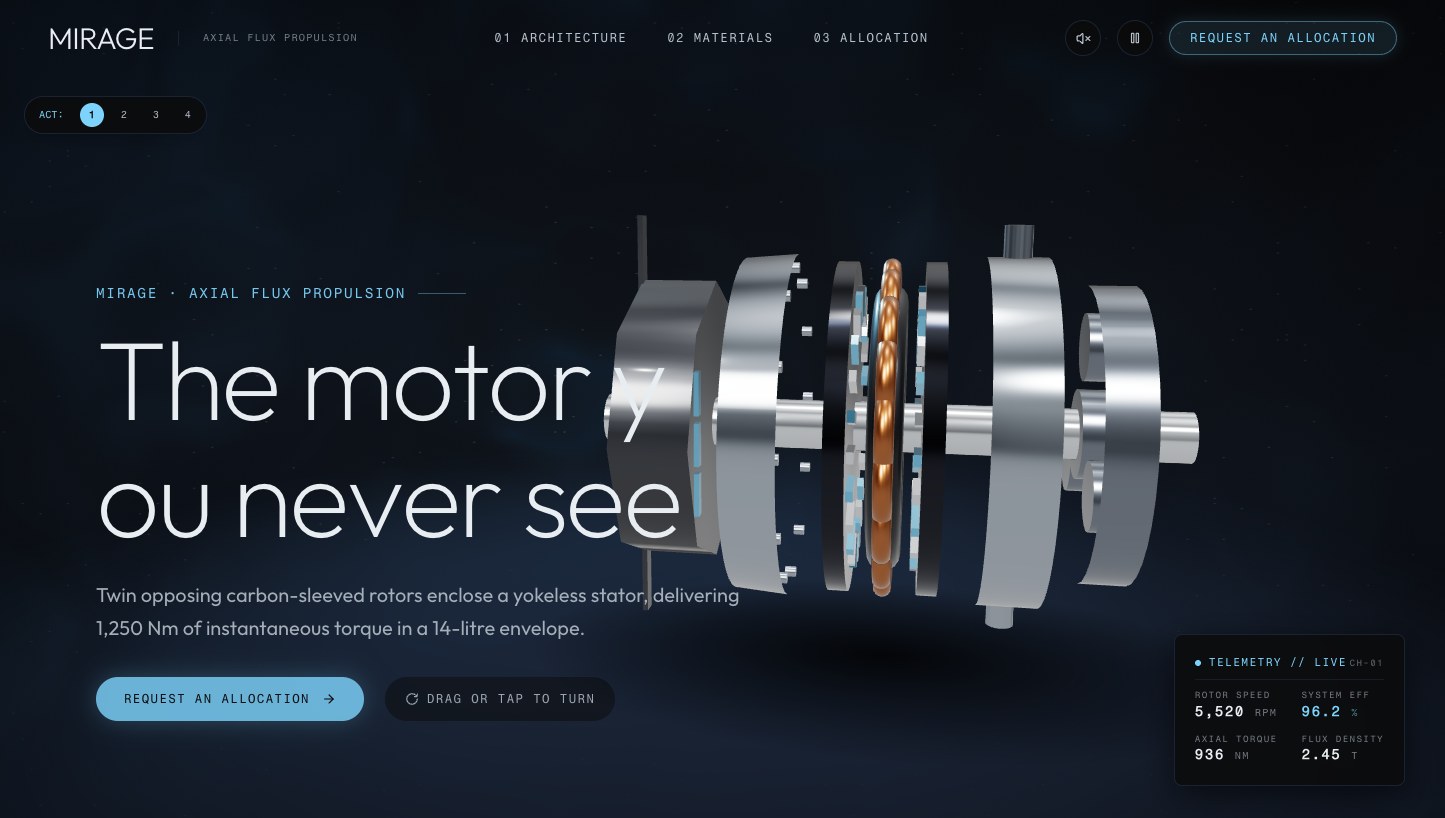
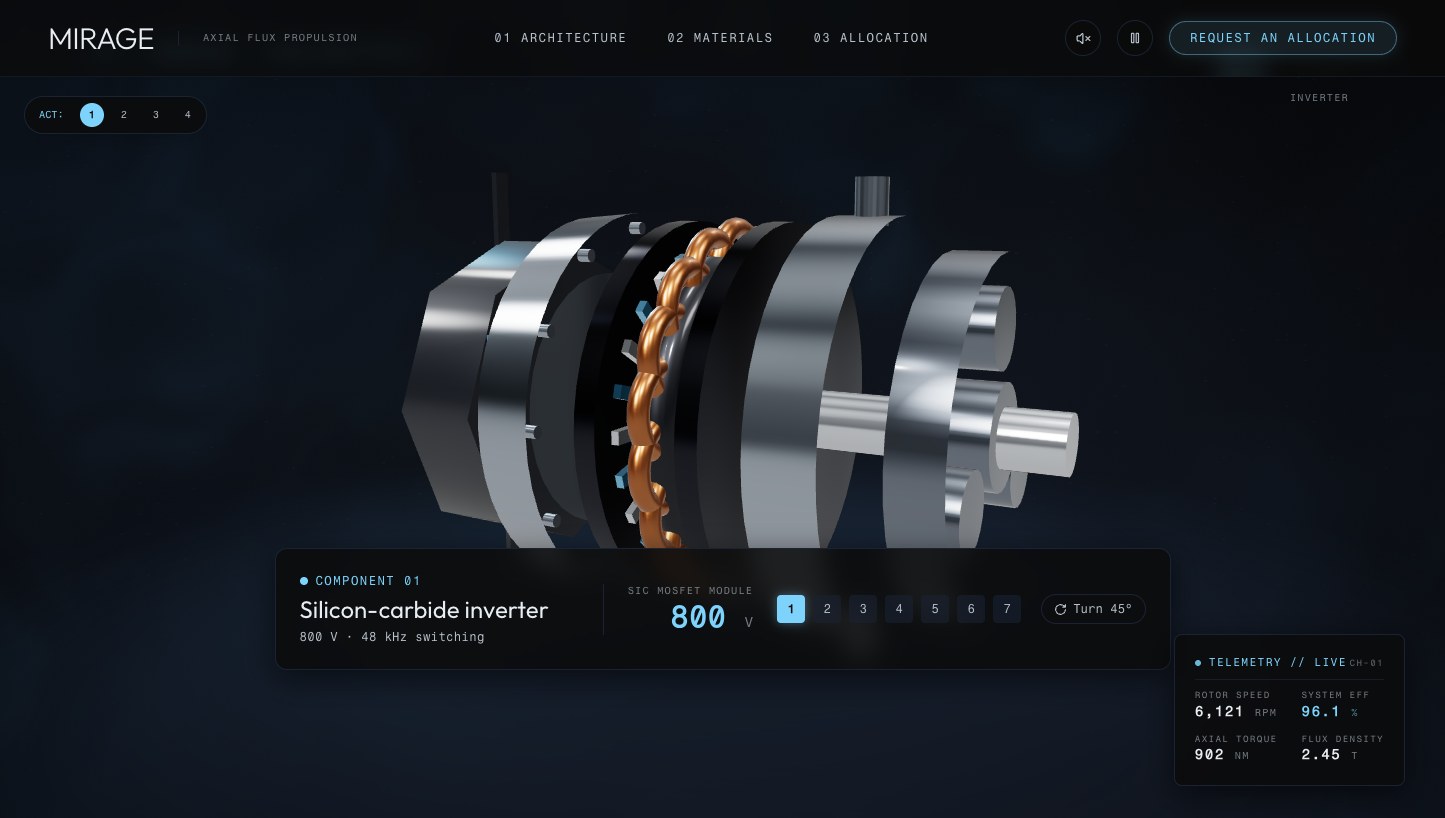
What Google Antigravity got right
- The four acts, with a switcher to move between them, and the headline wording.
- A motor built in code from separate parts that pulls apart, with seven named parts you can select one at a time.
- A live readout of rotor speed, efficiency, torque and flux, on a dark ground with a pale blue accent.
- No [VERIFY] markers on the page. Since 16 November every template prompt lists them in a comment at the top of the file instead.
What it got wrong
- The headline breaks inside a word on the first screen at desktop width: “y” ends one line and “ou never see” starts the next.
- It is rougher than the demo and than the Codex build: the motor is flatter and plainer, and the page is a good start to refine rather than a finished page.
Why it looks different
It is not a copy, and it should not be: Antigravity drew its own motor, its own type and its own controls. The prompt carries the idea, the order and the interaction; each build makes its own drawing of them, and a lighter model makes a rougher one.
Try it yourself
Mirage is one of the templates a free account can unlock. To have Google Antigravity fetch the prompt itself, see Vibesignet in Google Antigravity.